01
The next morning tells on it
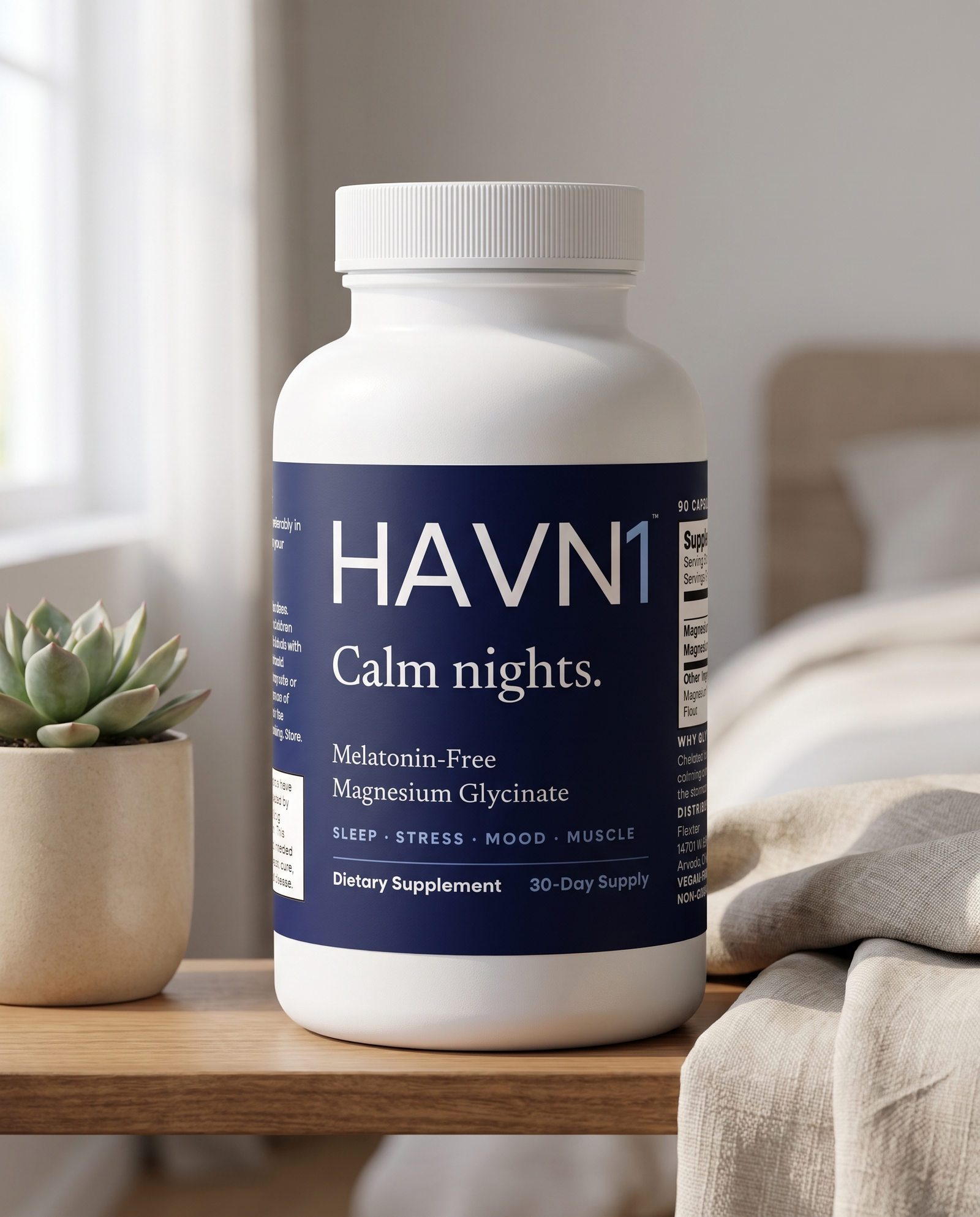
Melatonin is a hormone that signals what time it is, which is why it was studied for jet lag and shift work, not nightly use. Next-day drowsiness is among its most commonly reported side effects in the clinical literature, especially at the multi-milligram doses most gummies deliver, which can run many times higher than what the body produces on its own.
That is the trade a lot of people quietly accept: help falling asleep, paid for in a foggy first hour of the morning. The first question worth asking about any sleep aid is not how the night goes. It is how the morning feels.
02
Nobody double-checks the gummies
In 2023, researchers writing in a leading medical journal lab-tested 25 melatonin gummy products off store shelves. Actual melatonin content ranged from roughly three-quarters of the label claim to nearly three and a half times it. One product contained no detectable melatonin at all.
Dietary supplements are not pre-approved for accuracy before sale, so the label is a promise, not a measurement, unless the maker verifies it. Whatever you take at night, the honest questions are the same: what form, what dose, and who checked?
03
The mineral alternative
Magnesium is not a hormone. It is a mineral your body already uses in over 300 enzymatic processes, including the ones that help the nervous system downshift at the end of the day. And most modern diets run short of it.*
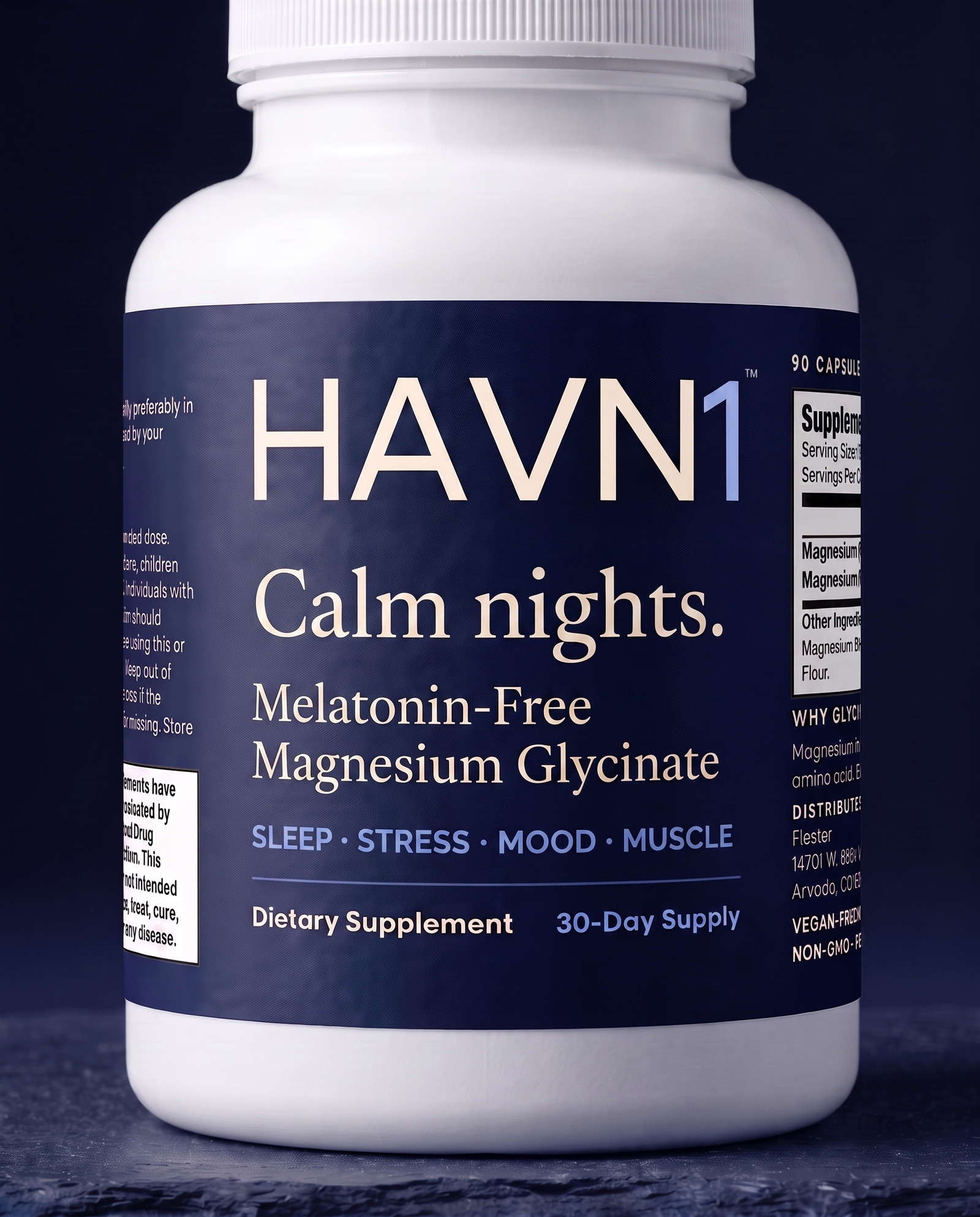
The form matters. HAVN1 uses magnesium bisglycinate: 275 mg of elemental magnesium, inside the 200–400 mg range used in clinical sleep research, chelated to glycine, an amino acid studied for its own calming role.* One serving, two studied compounds, every milligram printed on the label.
04
The ritual beats the pill
Here is the part most sleep-aid marketing skips: nothing you swallow replaces a wind-down. The people who sleep well tend to close the day the same way every night. The supplement's job is to support that, not substitute for it.*
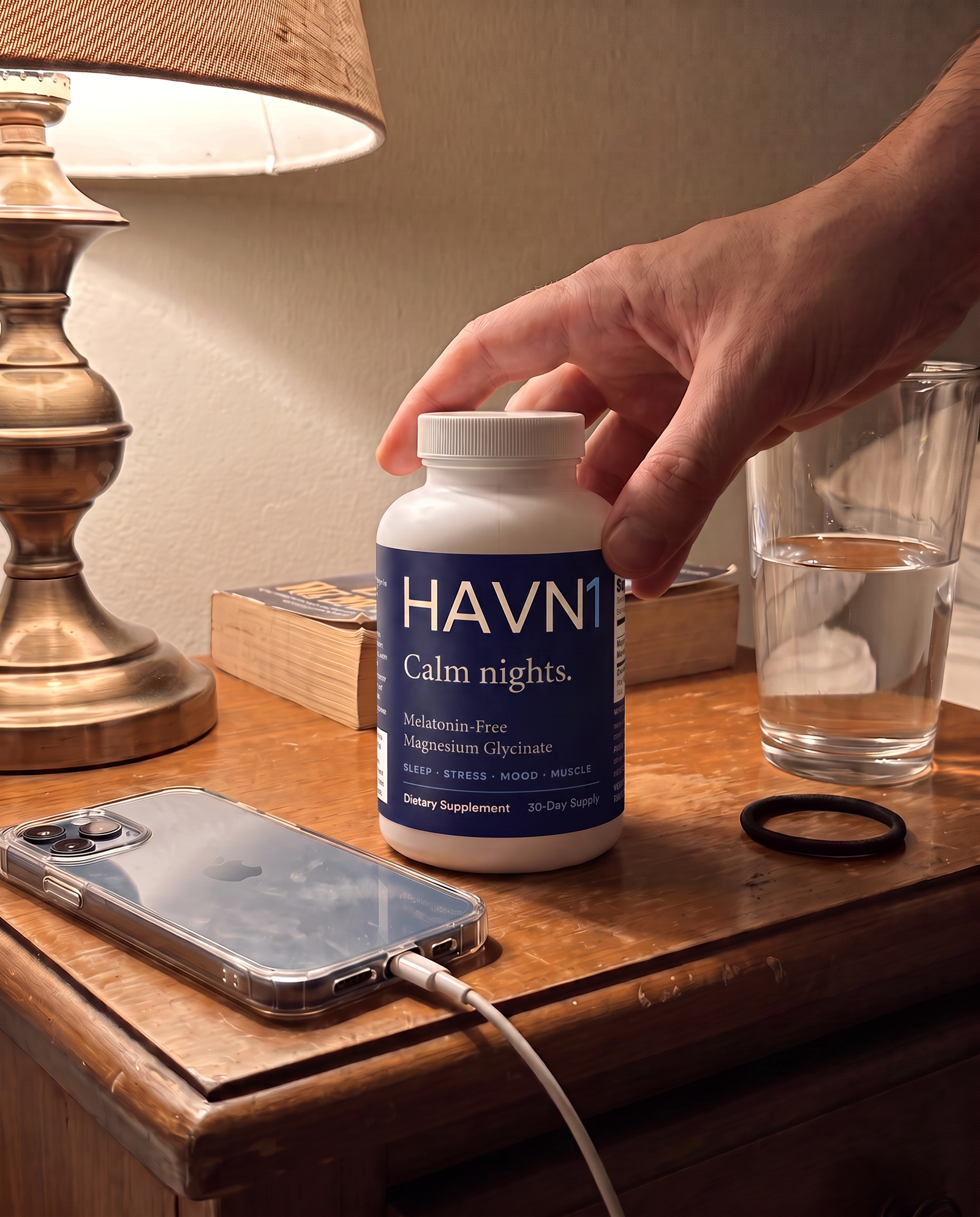
The HAVN protocol is deliberately boring: take your magnesium 60–90 minutes before bed at a consistent time, dim the lights, and put the phone somewhere else. HAVN1 is a nudge, not a knockout. There is nothing in it designed to sedate you, so there is nothing to sleep off.
05
The guarantee that makes it easy to test
Magnesium works with repletion and rhythm, not on demand. Most clinical sleep studies on it ran two to four weeks. So instead of promising you a miracle by Tuesday, we give you the honest test: a full month.
Take HAVN1 every night for up to 30 nights. If it has not earned a place on your nightstand, write to us within 30 nights of delivery and we refund the order in full. No return label, no restocking fee, no interrogation. The bottle is yours either way.
Real nights with HAVN1
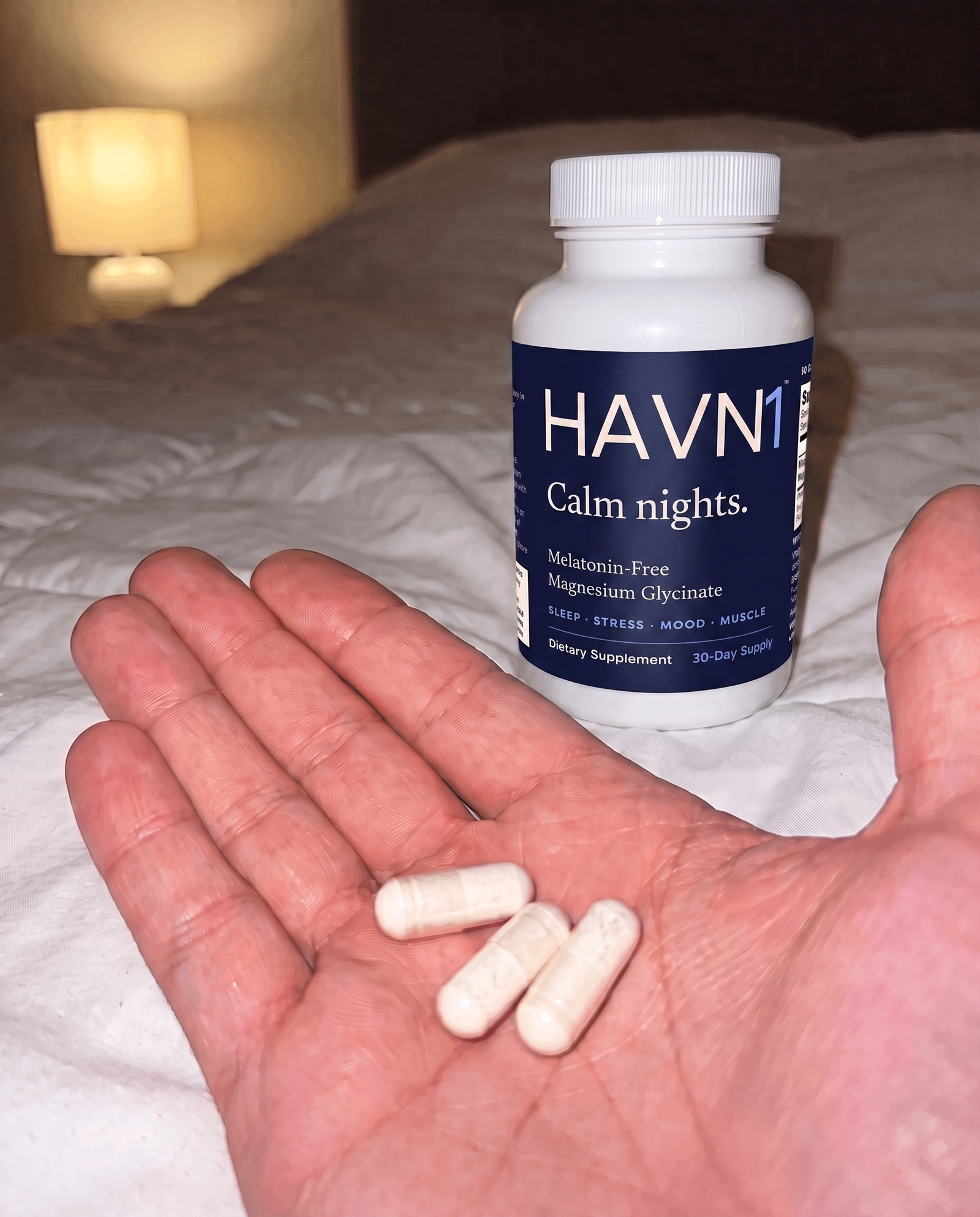
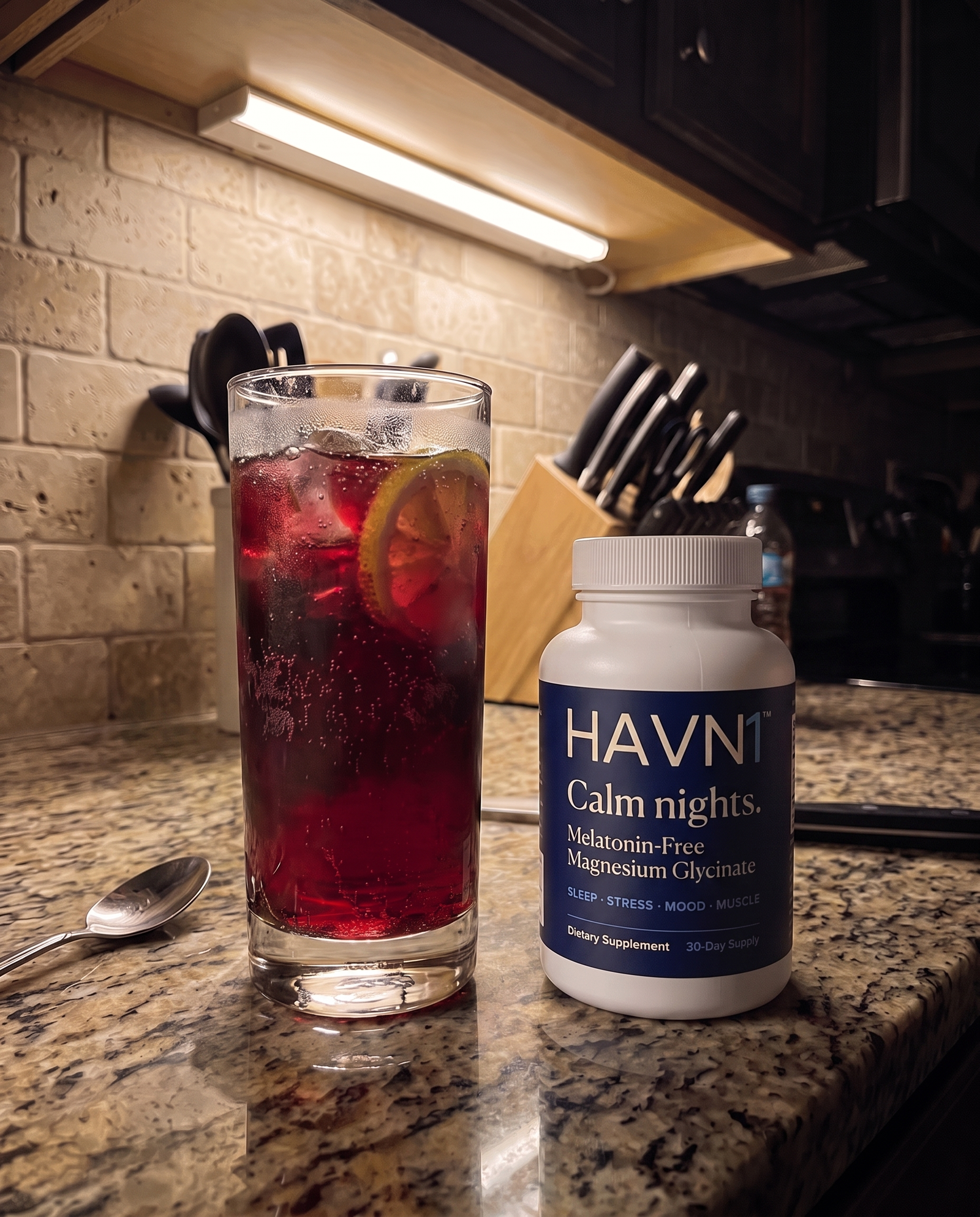
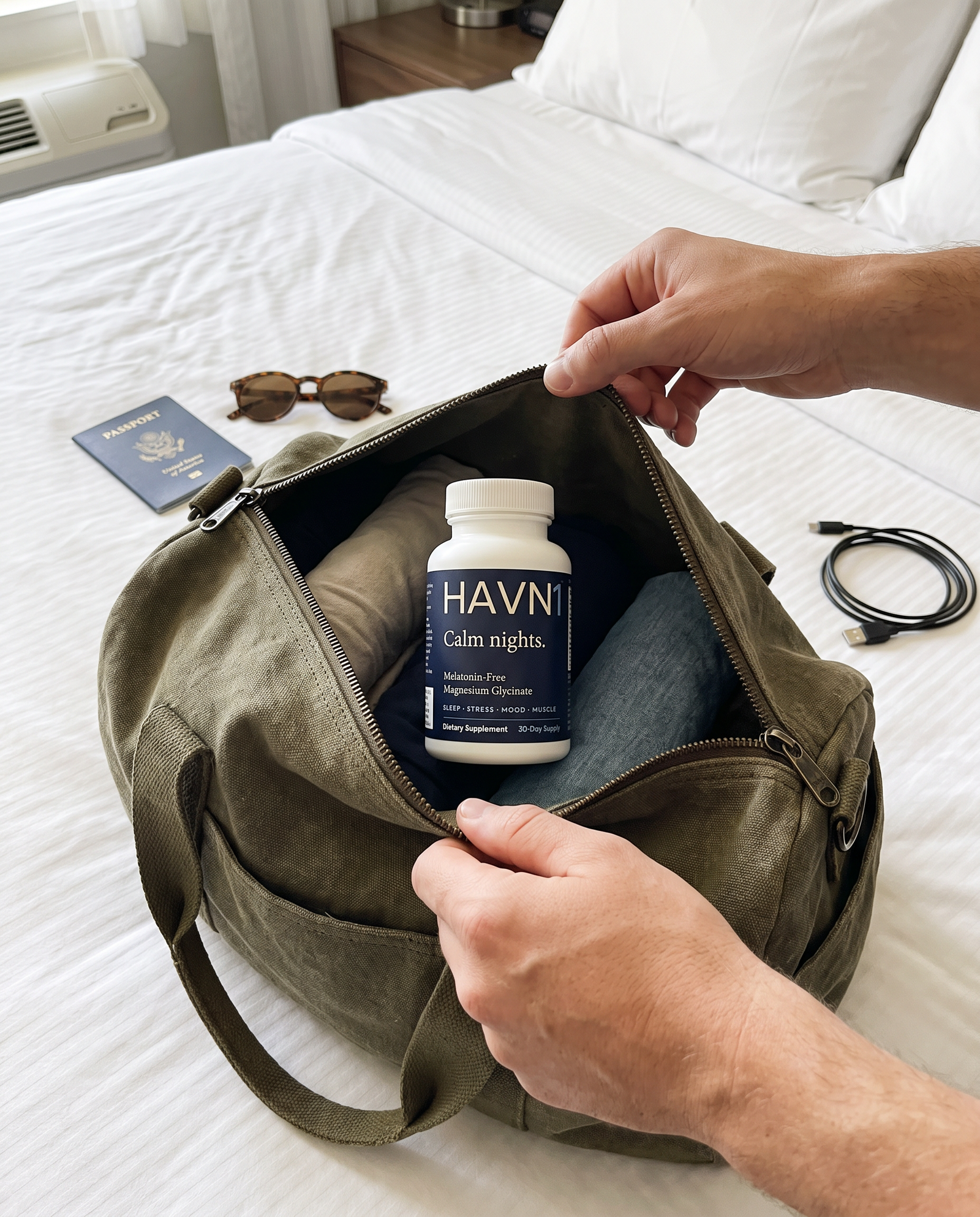
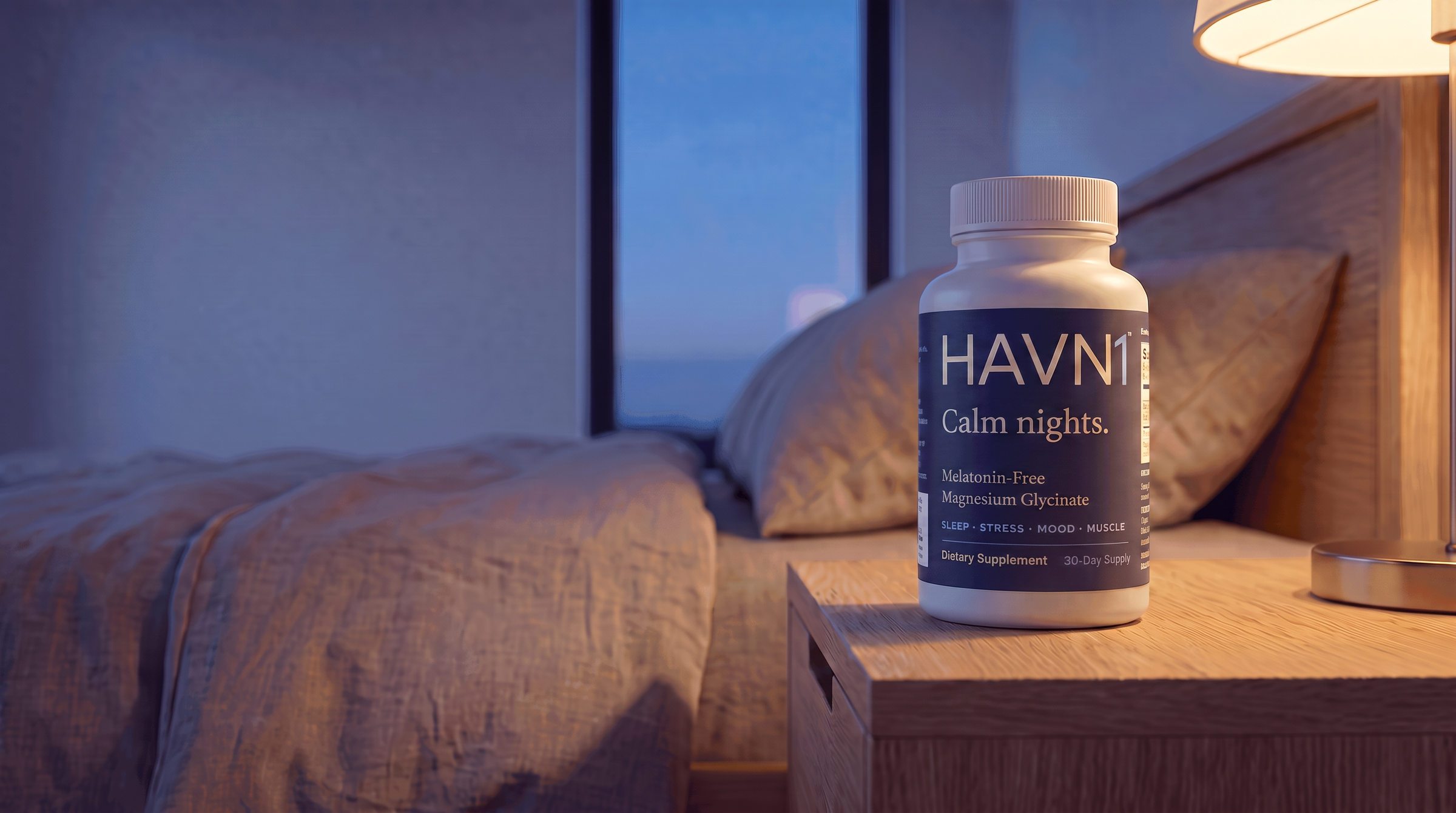
From our own evenings, the bottle where it actually lives.